Blog
How to track your trading performance?
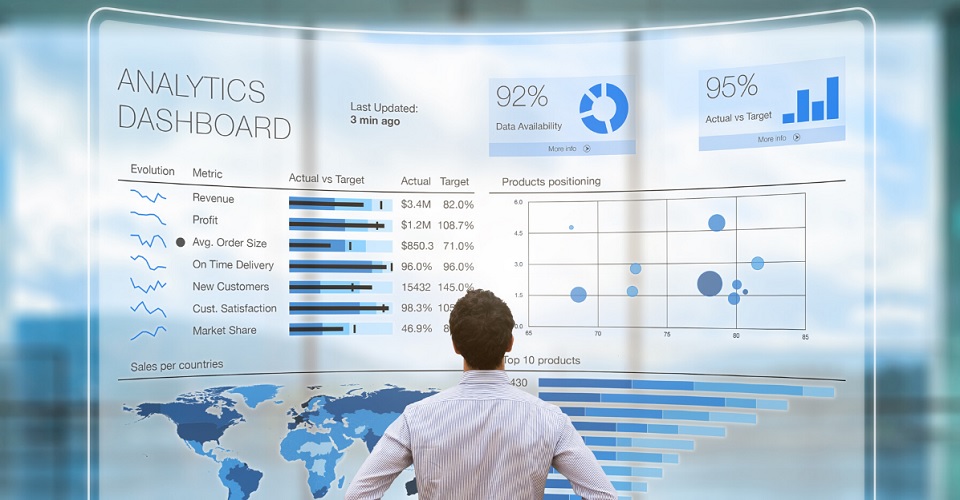
Trading performance should be investigated so as to interpret how one can do better in future trades. This includes understanding as well as evaluating the trading and system performance. Here are some ways how to do this:
a. Expectancy offers information about how much money you can make on average per trade. The expectancy is calculated as follows:
Expectancy = [Winrate * Reward:Risk * Poition Size] – [(1-Winrate) * Position Size]
b. Risk of Ruin this helps you determine how likely it is for all the money to be lost, thereby showing the importance of account swings and drawdowns.
c. Recovery Rate offers information about how much return you can get to recover losses and go back to the point where you can breakeven.
Trading Performance can be measured as follows:
- In percentages it is not advisable to stick to percentages only as you will not be able to consider the size, frequency and significance of drawdowns. You will also need to take into account the risk of your particular strategy.
- Sharpe ratio this is a commonly used performance metric which analyses the risks of a trading method as well as offers insight on the volatility of account growth. A trader who is risk averse will want to minimise the sharpe ratio so as to avoid any considerable account swings.
- Sortino ratio this is an improvement on the Sharpe ration since it penalises the negative volatility, rather than the unusually high positives as the Sharpe ratio does.
- Measuring points or pips focusing on points or pips which are lost of gained per trade. This is not a very popular method.
- Measuring on a fixed risk the trader will predetermine the money that he can lose somewhat comfortably on a trade. This is referred to as the R.
Considering the above methods is important so that you can choose the one that works best for you. However it is important to point out some tips with regards to how much it is best to risk per single trade as this is a commonly asked question by many traders. While the answer depends on the individual, it is best to choose an amount which:
- Is comfortable for you so that you do not have to worry about your trades to an extent that you lose out on sleep so as to check out on them all the time.
- You do not experience certain emotions such as considerable fear as a result of minor movements to your position.
- Ideally you should be able to feel okay to forget about the trade for about a day
- A good tip is that for a dollar you are risking, you should be able to take on at least ten consecutive losses without ending up broke.
If you feel a bit unsure how to go about it all, we hope that you will feel better by the fact that you don't have to manually measure or calculate all this. Thanks to the FX Merge service, you can avail of an algorithm which will calculate all you need to know. All you need to do is set up your account on FX Merge and make the most of this service, including clear data and statistics that will make your trading experience much easier and better. Track your trading performance.
a. Expectancy offers information about how much money you can make on average per trade. The expectancy is calculated as follows:
Expectancy = [Winrate * Reward:Risk * Poition Size] – [(1-Winrate) * Position Size]
b. Risk of Ruin this helps you determine how likely it is for all the money to be lost, thereby showing the importance of account swings and drawdowns.
c. Recovery Rate offers information about how much return you can get to recover losses and go back to the point where you can breakeven.
Trading Performance can be measured as follows:
- In percentages it is not advisable to stick to percentages only as you will not be able to consider the size, frequency and significance of drawdowns. You will also need to take into account the risk of your particular strategy.
- Sharpe ratio this is a commonly used performance metric which analyses the risks of a trading method as well as offers insight on the volatility of account growth. A trader who is risk averse will want to minimise the sharpe ratio so as to avoid any considerable account swings.
- Sortino ratio this is an improvement on the Sharpe ration since it penalises the negative volatility, rather than the unusually high positives as the Sharpe ratio does.
- Measuring points or pips focusing on points or pips which are lost of gained per trade. This is not a very popular method.
- Measuring on a fixed risk the trader will predetermine the money that he can lose somewhat comfortably on a trade. This is referred to as the R.
Considering the above methods is important so that you can choose the one that works best for you. However it is important to point out some tips with regards to how much it is best to risk per single trade as this is a commonly asked question by many traders. While the answer depends on the individual, it is best to choose an amount which:
- Is comfortable for you so that you do not have to worry about your trades to an extent that you lose out on sleep so as to check out on them all the time.
- You do not experience certain emotions such as considerable fear as a result of minor movements to your position.
- Ideally you should be able to feel okay to forget about the trade for about a day
- A good tip is that for a dollar you are risking, you should be able to take on at least ten consecutive losses without ending up broke.
If you feel a bit unsure how to go about it all, we hope that you will feel better by the fact that you don't have to manually measure or calculate all this. Thanks to the FX Merge service, you can avail of an algorithm which will calculate all you need to know. All you need to do is set up your account on FX Merge and make the most of this service, including clear data and statistics that will make your trading experience much easier and better. Track your trading performance.